


.jpg)
0-3 years
3-6 years
6-12 years
How can you balance indulgence and nutrition at breakfast?
December 12, 2025
.svg)
.svg)
.svg)
.svg)

How can you balance indulgence and nutrition in children's breakfasts?
So how can you help your child adopt a balanced, healthy, and filling breakfast routine without conflict or frustration?
The key also lies in how you approach this moment: time, rituals, gentleness, and diversity.
Beyond nutritional recommendations, it's important to establish a calm and gradual routine. Here are some practical tips for turning your morning meal into a peaceful and enjoyable experience.
Consider time as an ally in establishing a balanced breakfast
It is essential to allow time to gradually implement changes, regardless of the area concerned. Weekends and holidays are ideal times to change breakfast habits. The variety of options, repetition, immersion, and imitation create the space needed to spark a desire to discover and try new things. This extended period of time helps to reassure children and build their confidence, not only in themselves but also in the choices you offer them for breakfast.
Get into the habit of soaking up the breakfast atmosphere
Eating breakfast as a child and discovering the pleasures of food also means immersing yourself in a setting, an atmosphere, smells, and flavors that you won't necessarily find at other meals.
It may still be nighttime, it's still quiet outside, we're still in our pajamas with our stuffed animals. There's the smell of our parents' coffee and hot chocolate, toast...
This immersion can be encouraged by establishing a new evening ritual: to create an atmosphere and a "setting" conducive to breakfast, the breakfast table should be set the night before, after dinner.
This is another way to spend quality time with your child: choose a bowl or cup, talk about what you will serve in it, and develop counting skills at the same time. The child becomes an active participant, looking ahead to the next day.

Enjoy new ideas without creating frustration
Rather than trying to eliminate your children's favorite, very sugary cereals, continue to serve them the long-awaited and comforting bowl.
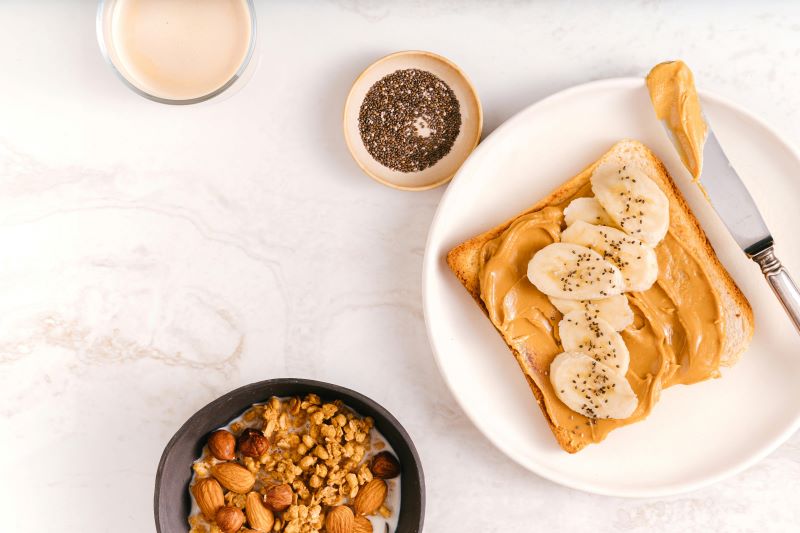
But also suggest nibbling on a few nuts that you can crack open together or spreading some almond butter on a nice slice of bread or yesterday's pancake.
The satiating effect of these foods will have a natural impact on the amount of grains consumed. And, gradually, children will stop eating them. They have the ability to listen to themselves and spontaneously gravitate toward what is good for them.
There will be no room for regret and frustration. They know that the bowl of cereal is a possible choice, not a prohibition.
By regularly involving your children in shopping trips, they can decide with you not to buy that cereal again.
On a day when they are tired or sad, or for a special occasion, they may ask for it again. And why not?
Diversify breakfast to stimulate children's curiosity about food
There are mornings when the desire to explore will not be there. In these cases, it's always a good idea to have a go-to food in reserve: your favorite, the one that won't make you late. It might be the bottle of milk you left at the back of the cupboard, your favorite yogurt, or Grandma's jam that makes you forget about yesterday's slightly stale bread.
For more peaceful mornings, it will be easy to offer a range of alternatives and, at the same time, contribute tothe child's sensory awakening:
- a basket of seasonal fruit;
- yogurts and cheese with various textures;
- eggs according to different recipes;
- A jar of whole nuts – from age 6 due to the risk of choking – or otherwise in purée form, changing the variety each time the jar is finished.
And, for cereal products, don't hesitate to make extra pancake, waffle, or crêpe batter when these treats are on the menu for snack time.
You can also buy bread made from different types of flour, which you can slice and store in the freezer. Just pop them in the toaster and the delicious aroma will wake up everyone at the table.
And, above all, don't deny yourself anything. Current recommendations lean toward a menu that, if not high in protein, is at least savory: why not leftover quiche from the night before or a grilled cheese sandwich, a few cherry tomatoes, or rice salad when in season?
Leftovers are often overlooked at breakfast, but they are a great opportunity to reminisce about a picnic or evening out, and to enjoy a favorite dish first thing in the morning.
It is thanks to these varied food options that habits will change with regard to the overly sweet composition of the traditional breakfast.
Setting an example to encourage imitation and independence at breakfast time
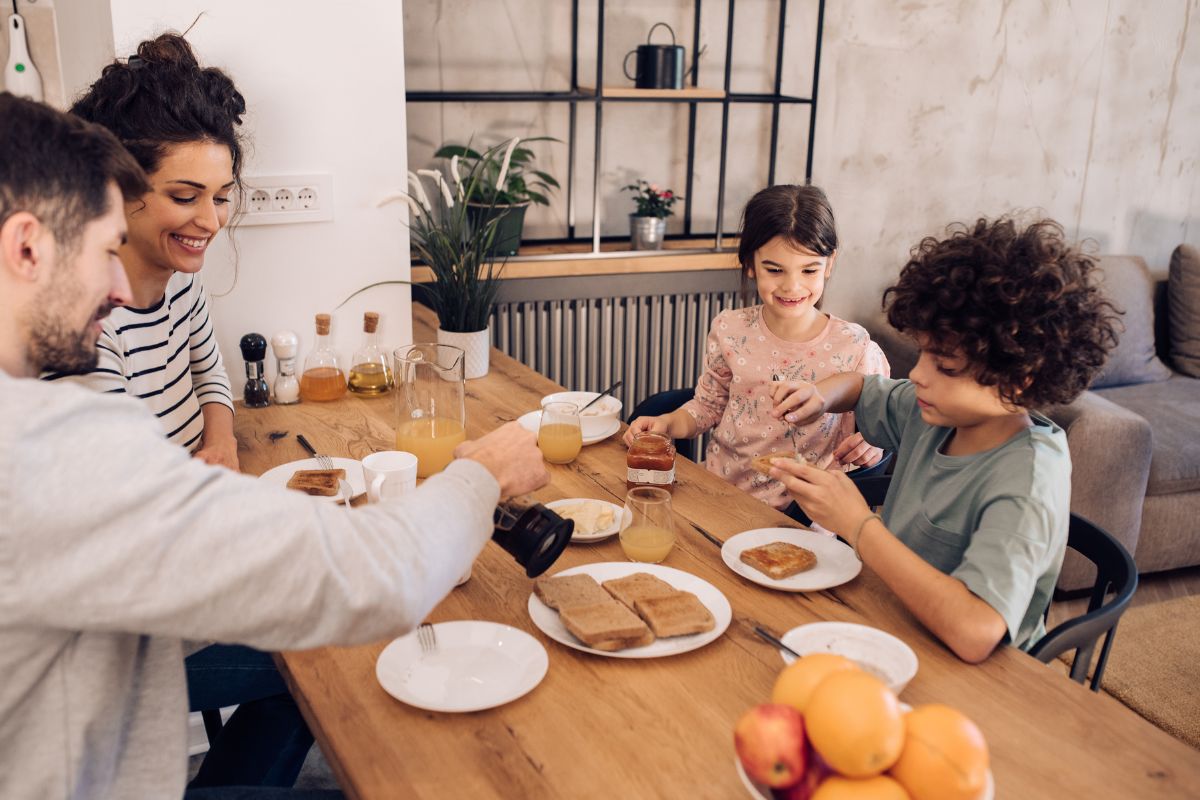
In Montessori pedagogy, imitation games play a key role. They contribute to the development of autonomy in young children. Children learn a great deal by observing adults and copying their actions.
By sitting down at the breakfast table yourself, you help make this meal a meaningful learning experience for your children. This approach is fully in line with the principles ofcompassionate education, which focuses on respecting the child's pace and the quality of interactions.
This first meal of the day, eaten together, is an opportunity for them to:
- to taste food on your plate rather than daring to take some from your own bowl;
- explain why it is important to eat breakfast: to be able to go to work, school, play sports, look after your little brother, garden, etc.
And, if you are not in the habit of eating breakfast, you will find that it is often thanks to children that we change our habits. Try it and you will see the benefits of eating a good breakfast with your family.
Repeat over and over again to establish a balanced breakfast routine.
Repetition helps to cement habits and build self-confidence. Whether it's an evening ritual, suggestions that appeal or those that initially seem unappealing, or even something new, repeat them tirelessly.
See this meal in a new light: as the first meal of the day, it strongly influences food choices, energy levels, and even mood in the hours that follow.
Thus, sugar cravings linked to feelings of fatigue, stress, and sudden drops in energy are positively correlated with the amount of sugar in foods that make up breakfast.
A body that wakes up after fasting for several hours needs foods that provide gentle energy through slow digestion. This is something that sugar, in excessive quantities, cannot provide. It releases energy that is as quick as it is fleeting.
A breakfast consisting of:
- of a dairy product;
- high-quality fatty acids;
- a cereal product that is as unprocessed as possible or homemade;
- and a piece of fruit, whole and not in juice;
- or even some vegetables if desired;
contributes to better weight regulation and emotion management.
Get support to enjoy a peaceful family breakfast
Mealtimes should be peaceful. This is a physiological necessity, as it aids digestion. We know that the stomach is a source of emotions, especially in children, for whom stomach ache can be a sign of a meal eaten in a hurry or in an unfavorable context. We want to avoid conflict and tears as much as possible at this time.
Meals should help build a collection of visual, olfactory, and gustatory memories that promote a healthy relationship with food.
If you are experiencing organizational difficulties, a lack of ideas, issues related to oral feeding, or complicated dietary diversification, do not hesitate to seek the assistance of a nutrition professional: nutritionist, dietitian, or nutrition therapist.
FAQ - Balanced breakfast for children
My child is starting school and still wants his bottle. What should I do?
It's better to have a bottle of milk comfortably at home or in the car than a little empty stomach. To make lasting changes, you have to let go of preconceptions and misconceptions. Not to mention that starting kindergarten is already a big change in routine, so you might as well take the time to change up breakfast.
Between an overturned bowl creating a chaotic start to the day and a bottle accompanied by a few pieces of fruit or a few bites of toast, the choice seems obvious.
My child isn't hungry when he wakes up. How can I get him to eat breakfast?
A lack of appetite upon waking up may be linked to eating too much the night before, going to bed and/or falling asleep too late, resulting in difficulty waking up and leaving little time for breakfast.
Consider revising your evening routines to give him more time in the morning to indulge in the treats and suggestions mentioned in the article.
When you first start changing habits, you can also prioritize a calm time around waking up and take a bottle, a drinkable yogurt, or a homemade crepe, waffle, pancake, or slice of cake (such as a sponge cake or yogurt cake) with you for the journey.
Ideally, industrial products should be avoided as much as possible due to their sugar and additive content.
My child prefers processed foods to homemade meals. What should I do?
When you want to establish new habits, it is essential to allow for a transition period. For example, you can keep your favorite store-bought cookie for snack time, accompanied by a piece of fruit and/or a dairy product, and introduce homemade cookies for breakfast.
Cooking the week's snacks with your child on a rainy Sunday will make them feel involved and valued. They will be more inclined to enjoy what they know because they made it with you.
Article written by Isabelle Bouclier, nutrition therapist, available on Instagram, LinkedIn, and Facebook.

7
Campus
+40
Nationalities
2
Teachers per class of 18 pupils
+400
Families place their trust in us
%20(1).png)
Request for Information
Request a brochure about our schools and visit them with your child.
.svg)
Share this article
Want to give it a try?
Would you like to offer your child the opportunity to develop in one of our international schools? It's possible to book a tour of our facilities.
.svg)
OUR BLOG
You may also like

0-3 years
3-6 years
6-12 years
News
Adolescence

3 minutes
March 23, 2026
Enrolling an expatriate child in school in France
Making a Smooth Transition to School
0-3 years
3-6 years
6-12 years
4 minutes
December 12, 2025
How can you balance indulgence and nutrition at breakfast?
Simple, helpful tips to help your child eat a balanced breakfast.

3-6 years
6-12 years
8 minutes
November 10, 2025
Individualized support at school: foundations and practices
In our schools, we draw on research in the cognitive sciences to offer learning adapted to each student.
